You’ve probably experienced that dreaded moment when an unknown number pops up on your phone, and you’re faced with the eternal question: to answer or not to answer.
That’s cold calling in action, but it’s just one piece of the sales calling puzzle.
Luckily, AI-bees study shows that 82% of buyers consent to meetings when approached by SDRs.
While cold calls might make you dizzy, warm calls can feel more like catching up with an old acquaintance if done right.
Cold Calling VS Warm Calling
The main difference between cold calling and warm calling is the prospect’s familiarity with your brand. Cold calling targets individuals with no prior interaction, making it harder to gain trust. Warm calling reaches leads who’ve engaged with your brand, allowing for smoother, more personalized conversations.
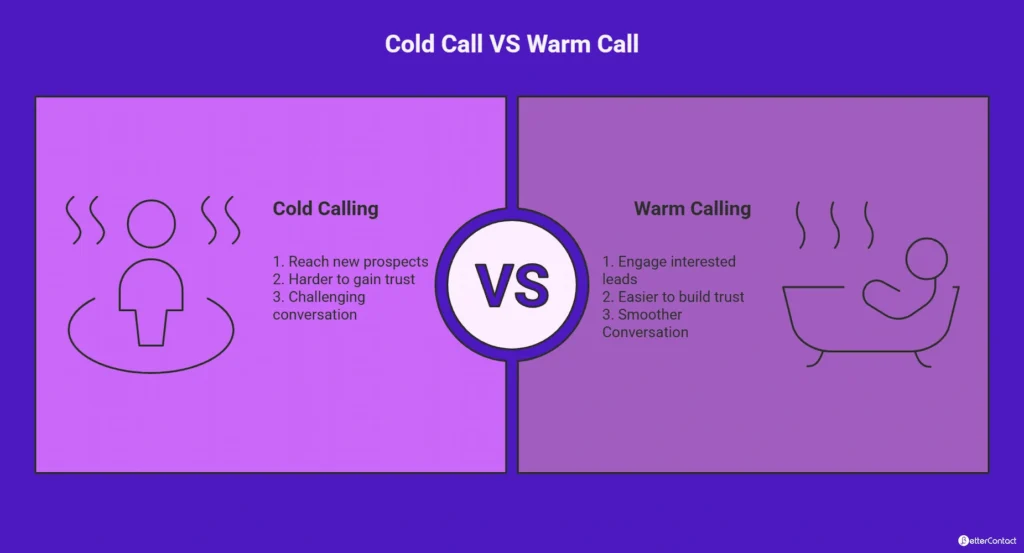
❄️Cold calling: Think of it as jumping into a freezing pool – you’re reaching out to prospects on your prospecting list who’ve never heard of you before.
It’s challenging, but it can open doors to unexpected opportunities.
🔥Warm calling: On the other hand, it’s like stepping into a jacuzzi with close friends – you’re connecting with people who’ve already shown interest in your product or service.
They might’ve visited your website, downloaded content, or engaged with your brand in some way, making the conversation flow more naturally.
What Is Cold Calling?
Cold calling is the practice of contacting potential customers who have had no prior interaction with your business. These unsolicited calls aim to introduce products or services and initiate sales conversations. Cold calling relies on persuasive communication and strategic timing to overcome initial resistance.
📃Read This: How to cold call like a PRO
Best Cold Calling Tips:
The best cold calling tips include researching prospects, using strong opening lines, preparing for objections, and calling during optimal hours. Build a targeted lead list, tailor your pitch, and stay persistent. Timing and preparation are critical for converting cold leads into potential customers.
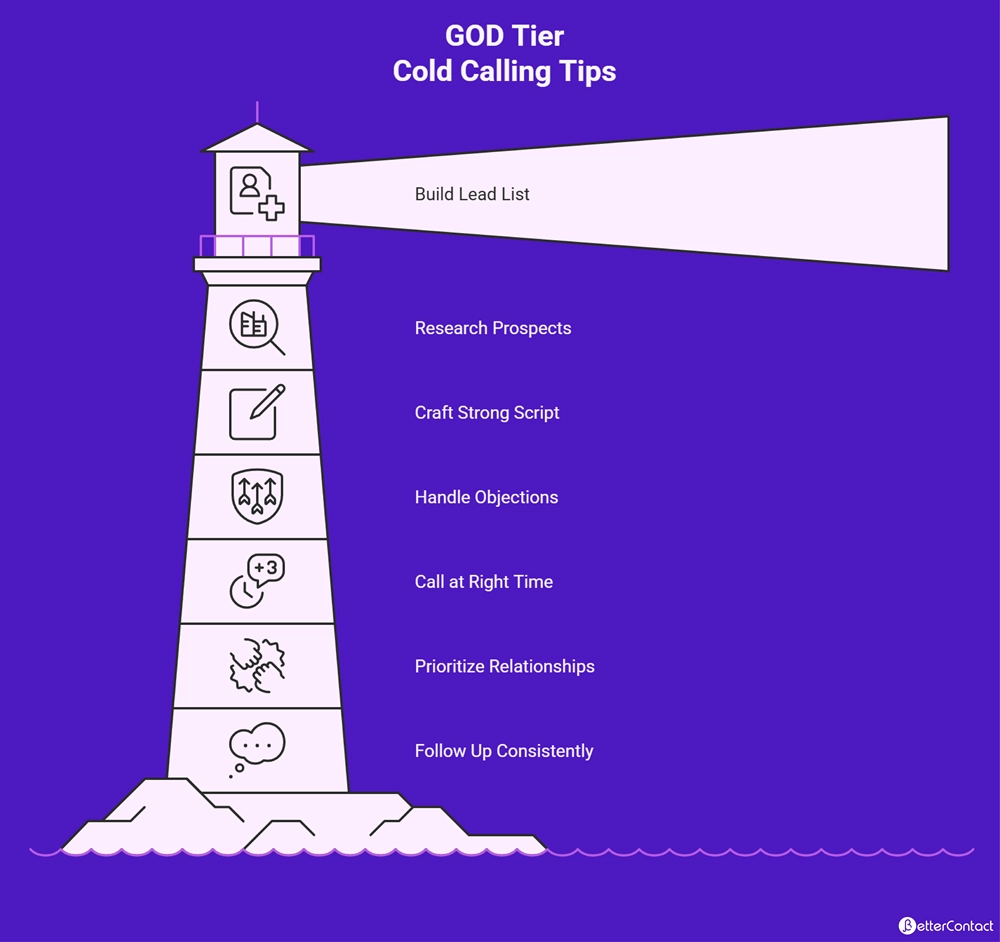
- Build a Lead List: A successful cold calling campaign begins with a solid lead list. Tools like Clay with BetterContact or Apollo + ExportApollo + BetterContact can build B2B contact database.
- Research your prospect: Understand their challenges, industry trends, and pain points to tailor your pitch and stand out from other callers. Use tools like Clay to enrich your client’s information.
- Craft a Script with Strong Opening: Use prospect data and proven sales techniques to capture attention quickly and foster meaningful business conversations that build valuable relationships.
- Build Objection-Handling Scripts: Since rejection is common, prepare strategies to transform pushbacks into productive conversations and improve cold calling outcomes. Check out Jeremy Miner’s training for that.
- Call Only When the Time is Right: Research suggests targeting Tuesdays and Thursdays from 3:00 p.m. to 5:00 p.m.
- Prioritize Relationship Building: Active listening fosters connections, enhances customer experiences, and leads to better long-term outcomes.
- Follow up with Touch Points: Consistent follow-ups can turn cold calls into meaningful relationships, improving lead awareness and conversion rates. However, if you get a firm “no,” focus on more promising prospects.
📃Read This: Building Cold Calling Lists
What Is Warm Calling?
Warm calling is reaching out to prospects who have previously interacted with your business, such as visiting your site or engaging on social media. It builds on existing interest, allowing for more personalized conversations that increase the chance of successful conversions.
- They’ve visited your website
- Downloaded your lead magnet
- Interacted on social media
- You’ve sent them cold email
- You’ve sent them LinkedIn outreach
🏆You’ll find warm calling more effective than cold calling because you’re not starting from scratch; you’ve got valuable context about your prospect’s interests and behaviors to work with.
These prior touchpoints provide the perfect opportunity to create a more personalized and relevant conversation, which is more likely to lead to successful outcomes.
Best Warm Calling Tips:
The best warm calling tips include referencing prior contact, asking insightful questions, listening more than talking, offering immediate value, and outlining next steps. These strategies turn warm calls into meaningful conversations that nurture leads and increase closing rates.
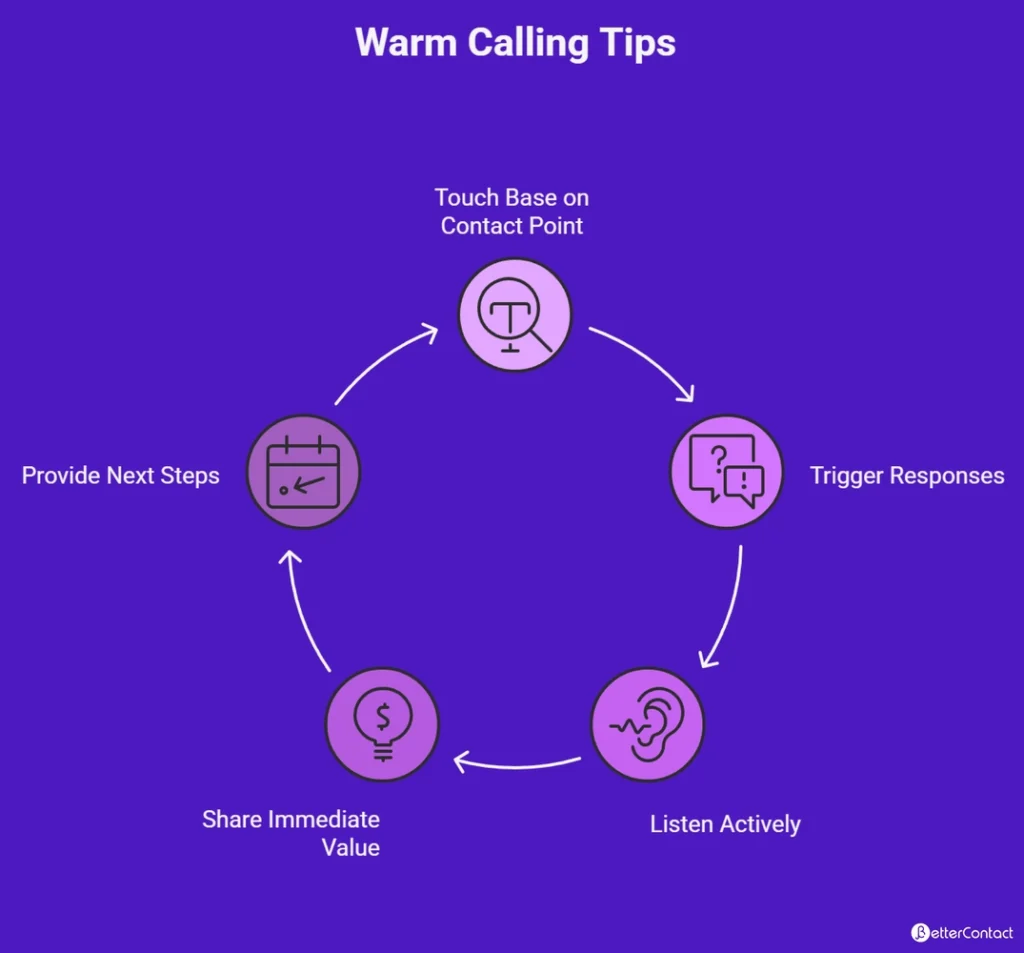
- Touch Base on Contact Point: Warm calling differs from cold calling as you’ve already made contact with the prospect. Use your sales platform to reference previous interactions, ensuring a more meaningful conversation.
- Trigger Responses with Open-Ended Questions: Open-ended questions are crucial for effective warm calling, as they encourage dialogue and engagement. Check out Jeremy Miner’s course to learn how to craft effective questions. Combine this approach with predictive analytics to more efficiently meet sales quotas.
- Speak Less, Listen More!: Listening without interrupting is crucial. Use headsets and CRM tools to record calls (with permission) for analysis. Active listening reveals pain points, boosting conversion rates and satisfaction.
- Share Immediate Value: Make the most of the first minute in a warm call by sharing immediate value. Present their sales audit, SEO audit, Ads Audit with solutions, relevant sales collateral, success stories, or case studies that resonate with your prospect’s situation.
- Provide Next Steps: After sharing insights, conclude with clear next steps, such as scheduling a follow-up meeting or a product demonstration.
This provides prospects with a clear path and the option to decline further communication.
Always end with a call-to-action.
What Are The Benefits of Warm Calling?
Warm calling benefits include higher success rates, as it leverages prior interactions to build trust. Reps can personalize pitches using insights from emails, social media, or events. This targeted approach increases conversion rates and differentiates warm calls from cold calls, where no prior relationship exists.
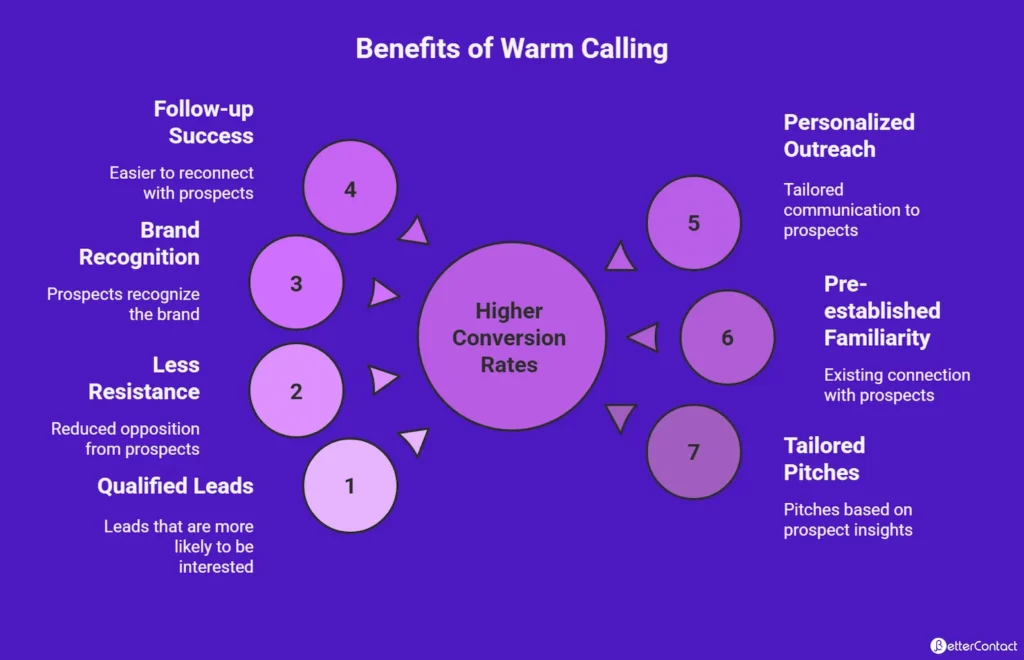
- More qualified and receptive leads
- Less resistance compared to cold calls
- Better brand recognition with the prospect
- Better follow-up success due to existing context
- Increased engagement through personalized outreach
- Higher conversion rates due to pre-established familiarity
- Tailored pitches based on real insights (emails, social, events)
What is Hot Calling?
Hot calling targets prospects who have shown strong buying signals, such as requesting demos or filling out contact forms. These leads are highly engaged, making hot calls ideal for closing deals quickly by focusing on their specific needs and converting interest into sales.
The best part is that hot calls often lead to higher conversion rates since you’re reaching out to people who’ve already raised their hands to say
“I’m interested.”
Meaning you can focus on addressing their specific needs rather than explaining why they should care.

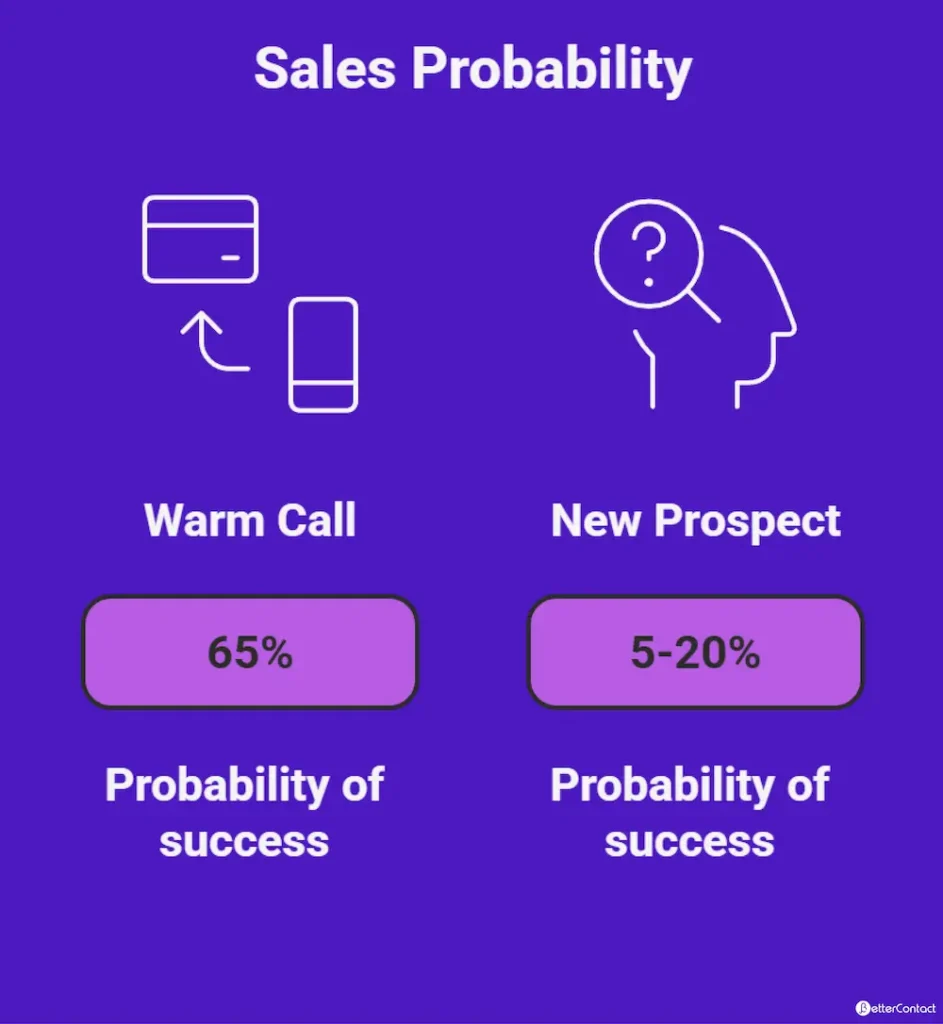
Fun Fact: Selling to an existing customer has a 60-70% probability of success while selling to a new prospect has a 5-20% probability of success.
Best Hot Calling Tips:
The best hot calling tips include researching recent lead behavior, listening actively, and addressing known pain points. Focus on providing high-value insights instead of pitching broadly. Hot calls work best when tailored to the prospect’s actions and urgency.
- Do Your Homework: Before calling your prospect, do thorough research on their needs and contact patterns. This ensures a focused and productive conversation about how your product aligns with them. Leverage social media and past interactions to ask prospects if they’re ready to proceed confidently.
- Provide High Value Consultation, not Pitch: Modern calling strategies prioritize value-driven consultations over traditional sales pitches. Position yourself as a consultant who addresses prospects’ challenges, focusing on how your solutions can enhance their business operations.
- Listen Actively: Active listening is crucial in hot calling, where prospects have already shown interest.
- Tackle Pain Points Head-On: Once prospects show interest, dig deeper into their challenges. Utilize CRM tools like Hubspot and Airtable, along with account-based marketing data, to prepare targeted solutions and address pain points directly during your call.
- Drive Action: After addressing pain points and demonstrating how your solution solves their problem, guide the conversation to encourage them to take action.
What Are The Benefits of Hot Calling?
Hot calling benefits include higher conversion rates, personalized outreach, and stronger prospect engagement. Reps can reference past interactions, address objections directly, and gather valuable feedback. This approach builds trust, tailors the message to specific needs, and increases customer satisfaction and sales performance.
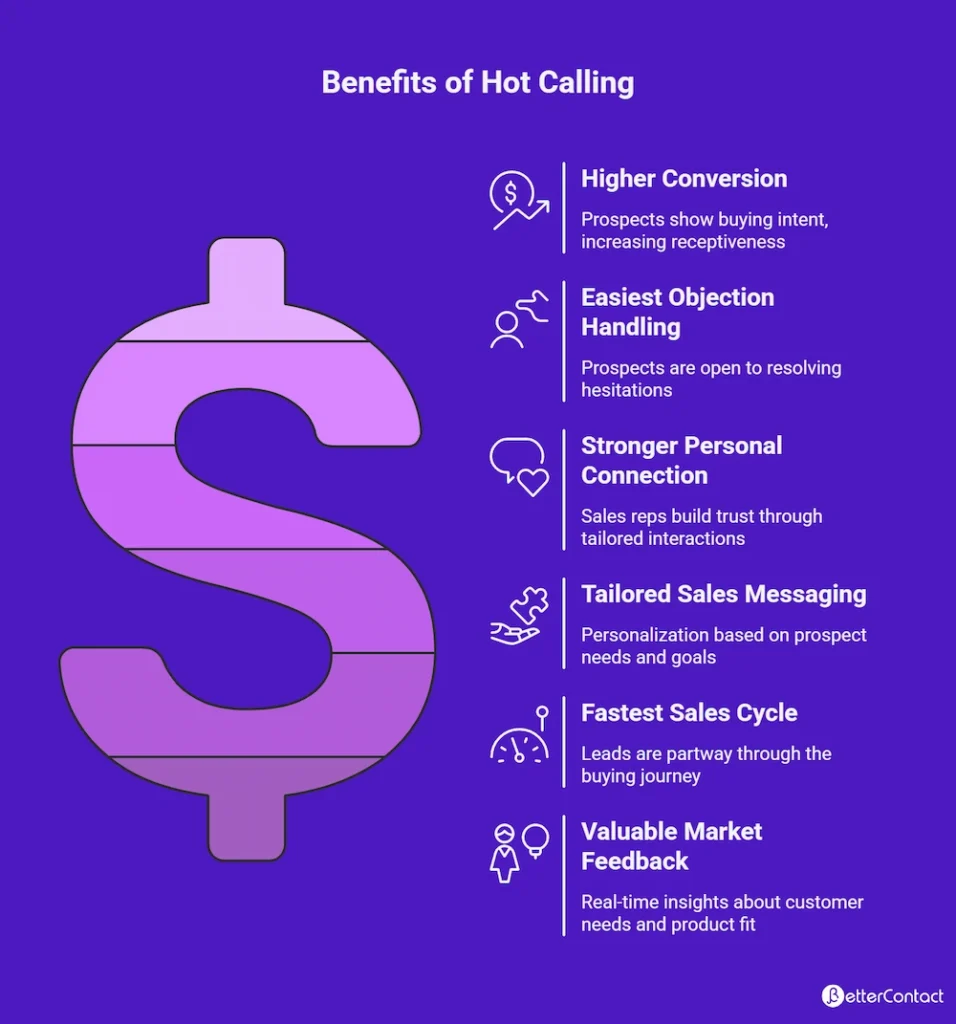
- Higher Conversion Due to Prospect Interest: They’ve already shown buying intent, making them more receptive to your call.
- Easier Objection Handling: Prospects are more aware of your solution and are therefore more open to resolving hesitations, making objection handling smoother.
- Stronger Personal Connection: Sales reps can reference past interactions and tailor their speech tonality, fostering trust and rapport.
- Easy-to-Tailored Sales Messaging: Enables SDRs and AEs to personalize their pitch based on specific prospect needs, pain points, and goals.
- Fastest Sales Cycle: Leads are already partway through the buying journey, reducing the time it takes to close deals.
- Valuable Market Feedback: Conversations with interested prospects surface real-time insights about customer needs and product fit.
Warm Calls vs Cold Calls vs Hot Calls: Main Differences
The main difference between warm calls, cold calls, and hot calls is the prospect’s engagement level. Cold calls involve no prior contact. Warm calls follow prior interactions like emails. Hot calls involve leads who’ve shown active interest, making conversion easier and conversations more natural.
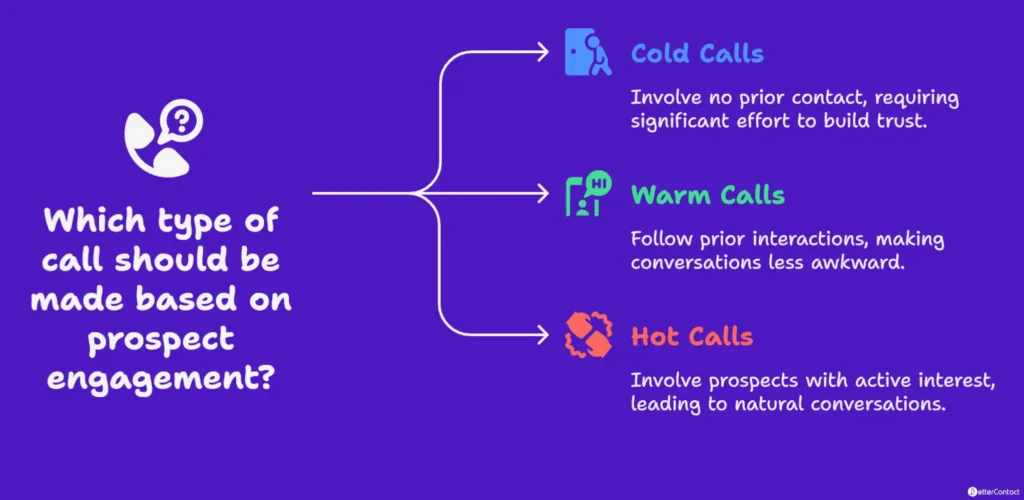
❄️Cold calls are like showing up at a stranger’s doorstep unannounced – you’ll likely face numerous objections since there’s no previous interaction. Sales reps often find themselves working extra hard to build trust from scratch.
🔥Warm calls, however, benefit from some earlier engagement, perhaps through email exchanges or social media interactions. Think of it as having a mutual friend make an introduction – it’s less awkward!
💣Hot calls represent the ideal scenario, where prospects have already shown significant interest in your product or service, making the conversation flow much more naturally.
To Wrap It All Up
You’ve now seen how cold calling and warm calling are like night and day in the sales world.
While cold calling means diving into icy waters with unknown prospects, warm calling lets you swim in familiar territory.
Whether you choose to brave the cold or stick to warmer waters, remember that each approach has its place in your sales strategy. Select the method that best suits your goals and target audience.
FAQs
What is The Best Warm Calling Software?
There is no dedicated warm calling software. Sales teams use general calling software like Aircall or Microsoft Teams Numbers after warming leads through LinkedIn campaigns and PhantomBuster data extraction. Enrich contact numbers using BetterContact to connect with prospects for warm sales outreach.
What Are the Best Cold and Warm Calling Training Programs?
The best cold and warm calling training program is Jeremy Miner’s 7th Level. It specializes in sales call scripting, objection handling, and tonality for both cold calls and warm calls. Google SDRs recognize the program for improving conversion rates and appointment settings.
What Are The Best Warm Calling Service Providers for Startups?
There are no exclusive warm calling service providers. Startups rely on multi-purpose calling tools like Aircall or Microsoft Teams Numbers after warming leads through LinkedIn outreach and PhantomBuster extraction. BetterContact enriches phone numbers for targeted warm outreach.
What Are the Best Warm Calling Strategies for SDRs?
The best warm calling strategies for SDRs involve driving traffic through SEO campaigns, capturing leads with RB2B, and enriching contact details using BetterContact. This process ensures highly qualified prospects and increases conversion rates in SaaS sales and B2B marketing.
What Are the Best Warm Calling Script Templates for SaaS?
There are no universal warm calling scripts for SaaS because each SaaS ICP responds differently to tone and messaging. SDRs should create custom scripts based on buyer behavior using frameworks taught in Jeremy Miner’s 7th Level NEPQ course.
How to Generate Leads for Warm Calling?
Generate leads for warm calling by running cold email campaigns through SalesHandy, collecting positive responses, and enriching phone numbers via BetterContact. This method enables SDRs to convert cold leads into warm prospects ready for personalized outreach.
What Is the Best CRM Tool With Warm Calling Features?
The best CRM with warm calling features is BreakCold, a social CRM integrating BetterContact for real-time mobile number enrichment. It enables sales teams to call warm leads directly from the CRM, combining lead management and outreach into one workflow.
What Are The Best Warm Calling Tips to Boost Appointment Setting?
The best warm calling tips for boosting appointment setting include pre-qualifying prospects using Clay to check funding, team size, and traffic data. By referencing previous engagements and tailoring messaging to address pain points, SDRs in B2B sales can increase meeting acceptance rates.
How to Find Untouched Leads for Cold Calling?
Find untouched leads for cold calling using BetterContact, a B2B database with 3 billion records and a 98.5% verified accuracy rate. BetterContact aggregates data from over 20 providers like Apollo, ContactOut, and RocketReach, ensuring SDRs access exclusive, real-time contact information.